

Artificial Intelligence (AI) is revolutionizing product development, but here’s the problem: not every product needs AI everywhere. The rush to include AI features often leads to bloated offerings that miss what users want. The key question for product teams and decision-makers is: Where should we apply AI to add value?
That’s where The Cintman Group’s Product Core/Function (PCF) Model comes in. This framework helps identify your offering’s core characteristics—those essential elements that define your product category and matter most to your users. Applying the PCF Model to AI integration ensures that new technologies enhance, rather than distract from, what makes your product valuable.
In this blog, we’ll walk through how to use the PCF Model to identify the most impactful places to implement AI in your product.
The Hype vs. the Value of AI
AI can automate tasks, personalize experiences, and reveal insights. However, when added without purpose, it can also introduce complexity, cost, and confusion. Many teams are pressured to “add AI” just to stay competitive, even if the resulting feature doesn’t support the product’s core function.
Instead of jumping on the AI bandwagon, product leaders should ask: Does this AI capability serve one of our product’s core functions?
By rooting the decision in a framework like the PCF Model, teams can avoid costly missteps and focus on innovations that genuinely improve the offering.
What Is the PCF Model?
Developed by The Cintman Group, it is a strategic framework for product managers. It focuses on identifying and aligning a product’s core characteristics within its category.
These core characteristics are not superficial features. Instead, they are foundational traits that every product in a category must possess. For example, all hats provide head coverage, use durable materials, and serve a purpose like protection or fashion. These are the core functions that every hat must fulfill.
By identifying these baseline characteristics in your offering, the PCF Model gives you a clear structure for decision-making. It allows teams to communicate effectively, prioritize features, and measure innovation against a well-defined standard.
Mapping AI to Core Functions
Using the PCF Model as a guide, here’s how you can make strategic decisions about AI:
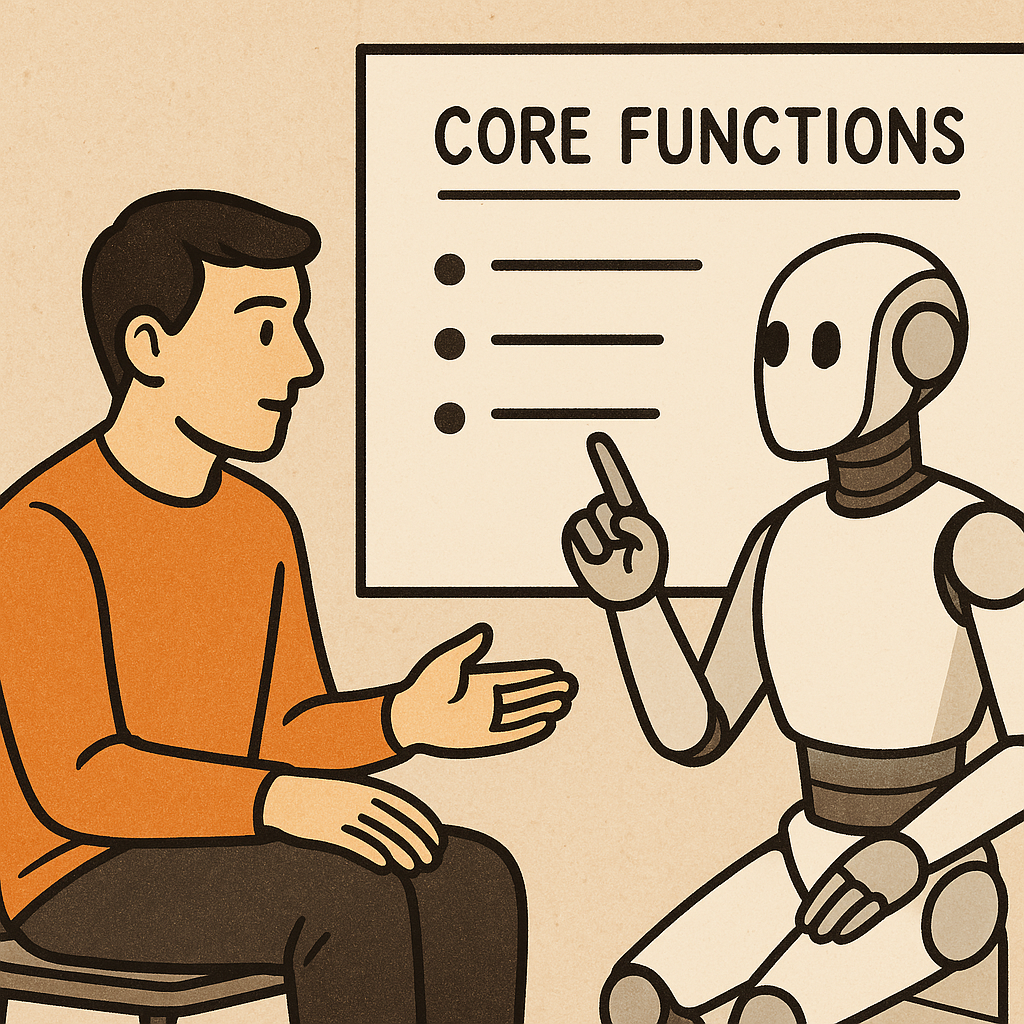
First, identify your product’s core functions. Your offering must deliver these essential operations or capabilities to meet user needs. For instance, in a digital asset management (DAM) system, standard core functions might include:
- Retrieval: The ability to locate and access digital assets quickly and accurately. This is a foundational need for users managing an extensive library of files.
- Governance: Ensuring asset usage complies with licensing, legal, and organizational standards. Governance might include lifecycle rules or usage rights.
- Metadata: Attaching descriptive data to assets, such as keywords, authorship, or content tags, to aid organization and retrieval.
Once you’ve mapped your core functions, evaluate where AI can help.
For each function, ask: Could AI improve performance, personalization, or scalability here?
For example:
- Retrieval: AI-powered search can analyze usage patterns to surface the most relevant files. It can also enable natural language queries that better align with user expectations.
- Governance: Machine learning algorithms can automate policy enforcement, such as flagging expired licenses or detecting unauthorized use of sensitive content.
- Metadata: Computer vision and natural language processing can generate automatic tags, saving users time and ensuring consistency across the asset library.
In each case, AI is not replacing the core function—it’s reinforcing it.
Case Example: Good AI vs. AI Creep
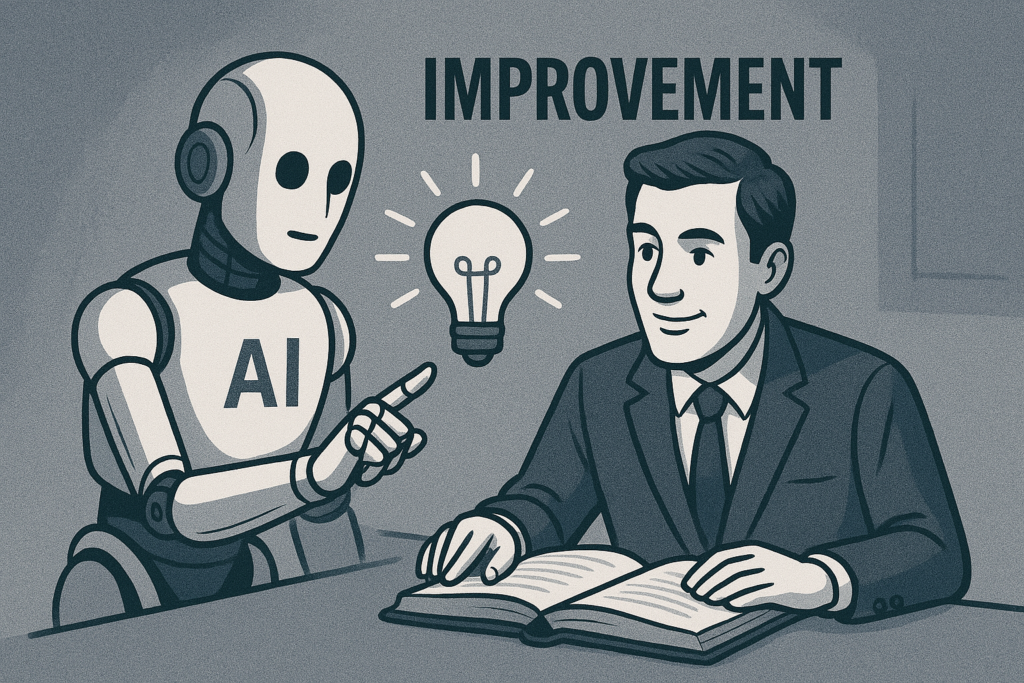
Consider a product manager working on a DAM platform.
- An example of AI creep would be adding a chatbot that offers marketing insights or navigation help, but interrupts users trying to complete their core tasks. If the chatbot doesn’t align with any core functions, it’s likely to be perceived as intrusive or unnecessary.
- A good AI application would use computer vision to auto-tag uploaded images with relevant keywords. This enhances the metadata function, making finding and organizing files without manual input easier.
By focusing on core functions, the PCF Model helps teams distinguish between enhancements and distractions.
Vetting Your AI Feature Ideas
Before committing resources to any AI-powered feature, consider the following questions. Each helps assess whether the idea supports the product’s core purpose:
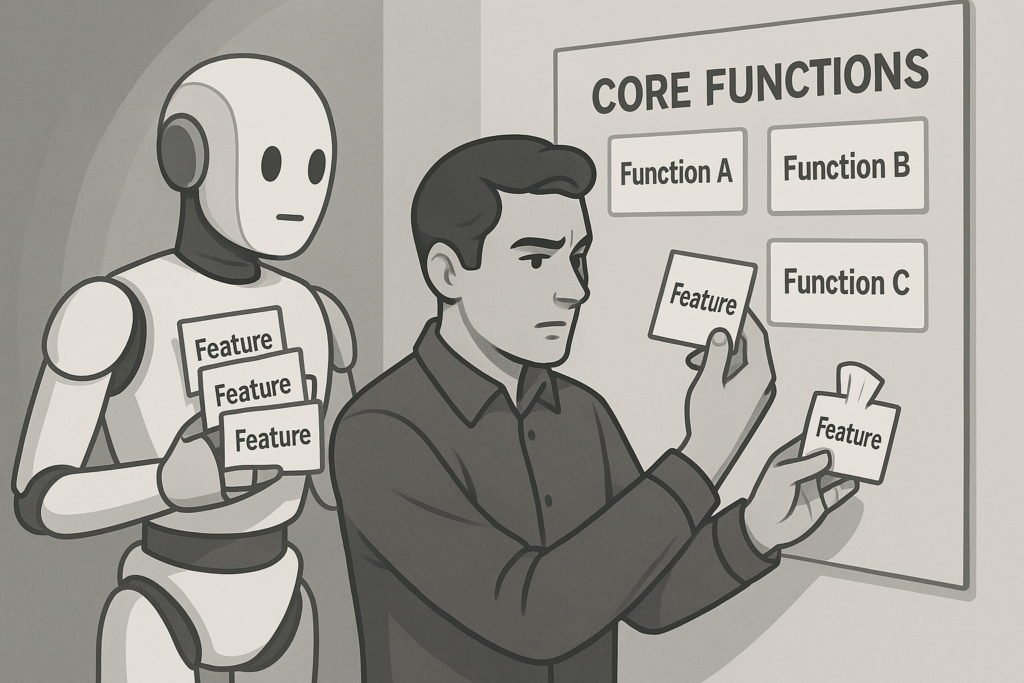
- Does this support a product’s core characteristic? The feature may be off-strategy if it doesn’t directly relate to one of your defined core functions.
- Will it make a measurable improvement in performance or usability? Consider whether the AI will help users achieve their goals faster, more accurately, or with less effort.
- Do we have (or can we access) the necessary data to support this feature? AI requires quality data. If you lack the volume, structure, or cleanliness of data, the feature may fail to deliver.
- Does it introduce unnecessary risk or complexity? Even beneficial features can backfire if they add confusion, introduce compliance concerns, or burden support teams.
If most answers lean toward “no,” it’s wise to pause and reassess.
Conclusion

AI can be transformative—but only when applied with clarity and purpose. The Product Core/Function Model offers a practical way to guide those decisions by tying every innovation to what your product fundamentally must do.
Using this model, you avoid the trend trap and focus your efforts where they matter most: enhancing the value your offering already delivers.
Want to learn more? Download the PCF Model White Paper or contact The Cintman Group to explore how this framework can support your AI product strategy.

The Cintman Group