

First, I’m not a lawyer, and this is not legal advice. Copyright rules involving artificial intelligence are still developing, and the answer can depend on how a work was created, edited, and used. If the material has serious financial or creative value, speak with a qualified intellectual-property attorney.
But I do not think uncertainty about copyright should stop people from creating with AI.
That is the most important point I want to make. AI can help a person or a business turn an idea into something useful. The possibility that some AI-generated expression may not receive copyright protection should not be grounds for abandoning the work, especially when the immediate goal is to communicate, educate, attract customers, or share an idea.
I have written about the difference between using AI as a tool and handing over the creative process in AI Content Copyright and Human-Led Creation.
The first question: what did you create?
The safest starting point is simple: if you did not personally create every expressive part of the final work, you should assume that you can claim full copyright protection over the final piece.
That does not mean AI-assisted work has no value, nor does it mean every work containing AI is automatically unprotectable. Human-written material, original ideas, creative selection, arrangement, and meaningful modification may still matter. The U.S. Copyright Office has focused on whether a human author contributed sufficient original expression, while merely providing prompts is generally not enough by itself.
So ask yourself: What did I bring to the work, and what did the AI system supply?
That question is useful for documentation and disclosure. It is not meant to become a creative roadblock.
My own example
Take this blog. It began as a spoken discussion that I dictated through Google Docs. The ideas, opinions, examples, and direction came from me. AI may help with transcription, organization, editing, improving readability, and preparing material for publication.
The polished final version may not be treated exactly the same way as the original human-created draft. That is why I keep the earlier version. It shows where the article began and helps distinguish my contribution from the assistance provided by AI; and to be very clear, this final output is almost certainly not protected.
A repeatable Content Framework can help preserve that process by creating clear stages for drafting, reviewing, revising, and approving content.
The second question: do you need copyright protection right now?
This is where the conversation becomes practical. Copyright protection matters most when the work has meaningful present or future commercial value. A book, course, photography collection, software product, training program, or valuable body of writing may justify a more careful process and legal review.
But not every blog post needs to be treated like a book manuscript. A local business may publish articles to answer customer questions, improve search visibility, explain its services, and bring people to its website. The business may not be trying to sell the article itself or license it as intellectual property.
For that kind of work, a consistent Content Studio process may matter more immediately than registering each individual post, or all of them, at some time in the future.
If your content is not being created for immediate commercial protection, the possibility that AI was involved should not hold you back. Use the tools. Create the blog. Develop the visual. Share the idea. Let the work serve its purpose.
Disclosure still matters
Using AI should not mean hiding AI use. Disclosure is part of responsible creation, especially when another person, client, customer, publisher, or audience may reasonably want to know how the work was produced.
Disclosure does not have to turn every blog post into a technical report. A short statement can be enough: “AI tools assisted with transcription, editing, organization, or visual development. The ideas, direction, and final review were provided by the author.” The exact language should match the work and any applicable rules for your industry, client, publisher, or platform.
Disclosure also protects trust. It tells consumers that AI was used as part of the process, while making clear who supplied the purpose, judgment, experience, and final decision.
When the stakes become higher
The approach should become more deliberate when the content may later become a book, course, product, licensing asset, or other valuable collection. Keep the original drafts, notes, recordings, prompts, revisions, and approval history. If you are building a larger intellectual property asset, consider seeking legal advice before registering or commercializing it.
Custom AI tools and workflows can also help organize source material and preserve a clearer record of how a project developed, but no workflow replaces professional legal advice when the stakes are high.
The practical takeaway
Copyright protection should inform your process, not prevent you from beginning.
Use AI when it helps you create something useful. Disclose the use when disclosure is appropriate or required. Keep your original material when the work may become valuable. Review the final result yourself. And get legal guidance when the work has enough commercial or creative value to justify it.
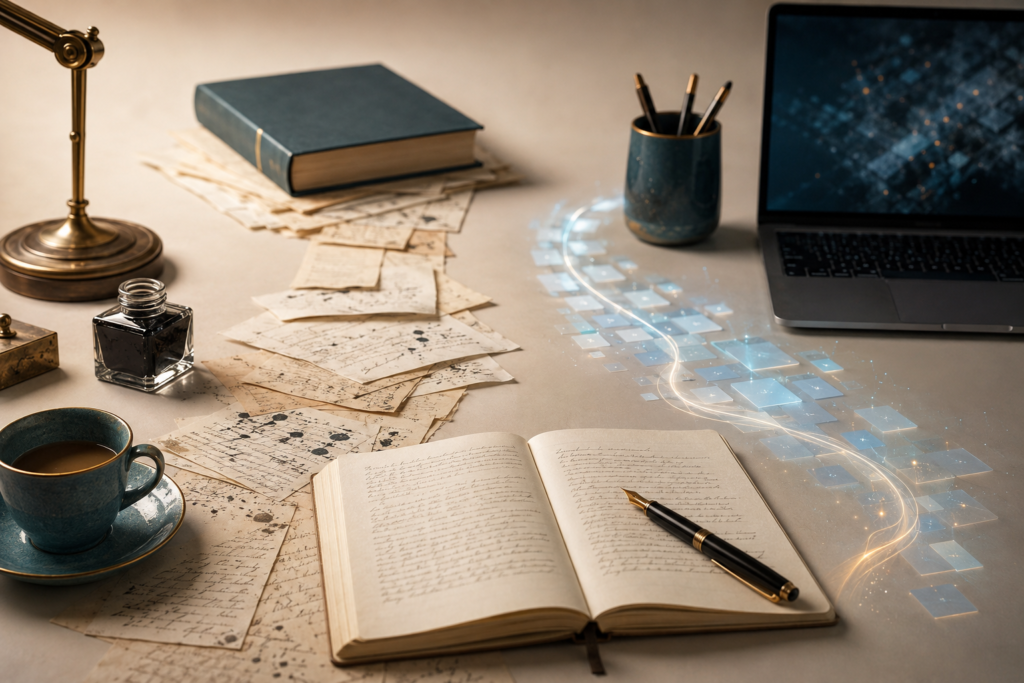
For me, that means AI is not a reason to stop writing. It is part of how I move an idea into the world. The important thing is to stay honest about the process, stay responsible for the final result, and understand what kind of protection the work actually needs.
You can explore more writing, technology, and creative-process discussions through the Cintman Insights library.
This article is for general informational purposes only. I am not a lawyer, and this is not legal advice. Copyright law varies by jurisdiction and may change. Consult a qualified attorney about your specific situation.

The Cintman Group