
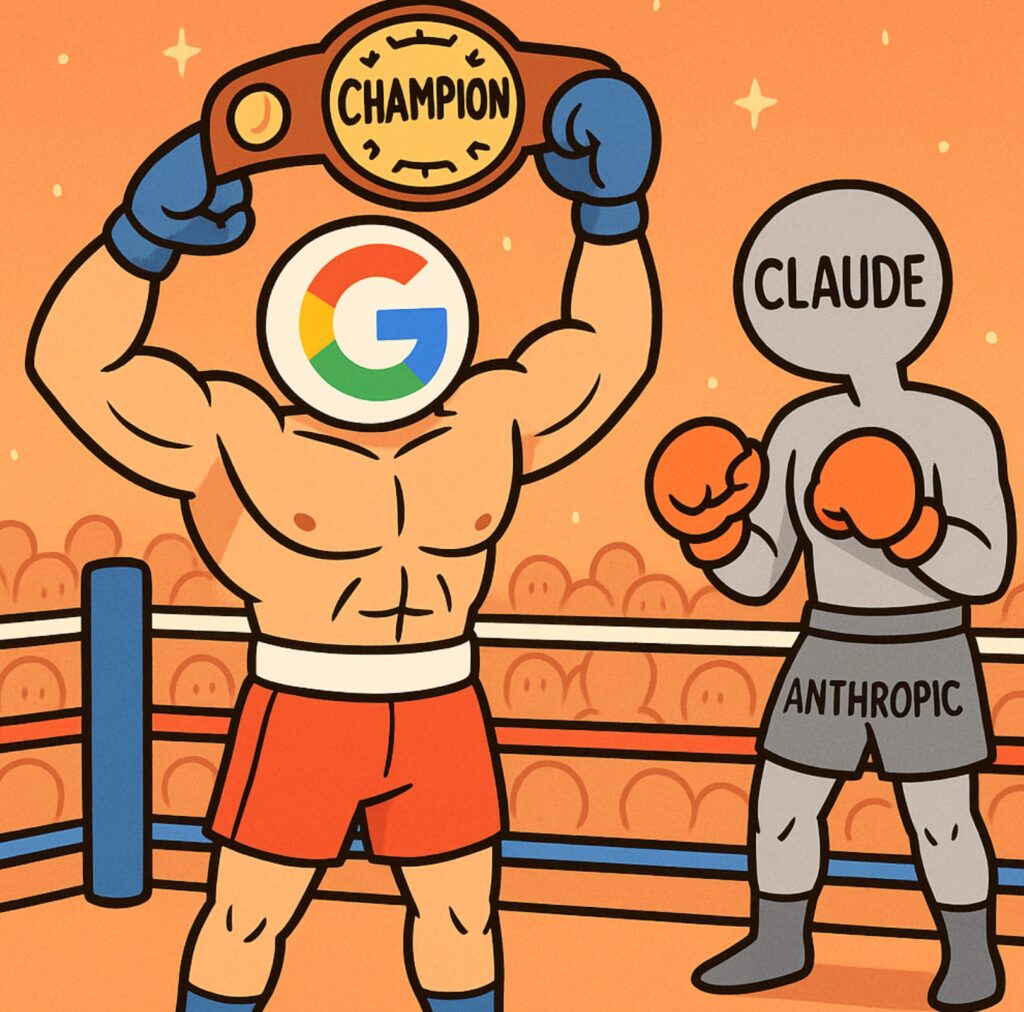
TLDR: A recent Tech Policy Press article critiques Judge Mehta’s ruling in US v. Google. The judge suggested that generative AI poses a real competitive threat to Google’s search dominance. The author argues that this is an understatement: Google’s ecosystem, infrastructure, and monopoly profits mean it has a substantial head start in AI. The ruling downplays the real challenge—Google’s ability to leverage entrenched advantages across products while competitors face steep uphill battles.
What the Judge Overlooked
Judge Mehta framed generative AI as a possible disruptor of Google’s search monopoly. On paper, that sounds like a leveling force. But as the Tech Policy Press piece explains, the real problem isn’t whether AI competes with search—it’s that Google already owns the rails. Its dominance in search feeds directly translates to its AI products, providing it with unmatched data, distribution, and cross-product leverage. The decision, by ignoring this, leaves the market tilted.
The Cintman Group Perspective on Generative AI
At The Cintman Group, we see generative AI less as a disruption and more as the next tool in a long line of innovations. Think back to the internet’s redefinition of cataloging and searching for information. That shift enabled entire organizations to flourish by helping people connect with what they wanted more quickly. (For example, it’s been years since I even considered the Dewey Decimal System at my local library—if it’s still there, I haven’t used it.)
AI builds on this same lineage, but with a crucial difference: context.
Search With Context, Not Fragments
Traditional search was a series of disconnected attempts—type a query, sift through results, try again. Generative AI stitches context together. If I search for “baking apple pie,” I don’t just get the recipe. I’m offered related ideas—building crusts, crafting fillings, or trying new varieties of pies. The experience is expansive rather than restrictive. That’s not unique to Google; it’s the new baseline for what AI-powered discovery should be.
Google’s Position in the Market
The author of the article suggests Google is in a uniquely dominant position. And yet, in my daily work, I find Google less valuable than before. I still use it, but ChatGPT has become my default. For me, Chrome is no longer the center of the internet. Unless Google can make Gemini seamless across its ecosystem of tools, its edge may erode faster than the judge (or the author) anticipates.
Where Google May Still Hold the Advantage
That said, Google’s ecosystem matters. From documents to storage to collaboration, its tools are embedded in how many professionals operate. If Gemini evolves to match or exceed the usability of competitors like Anthropic or OpenAI, Google could very well extend its dominance. However, their AI currently lags, and niche AI tools are capturing specific markets with speed and precision.
For the moment, I’d argue the judge’s ruling wasn’t as far off as critics say. The game isn’t over—it’s still being played.
Takeaway
Generative AI isn’t just about replacing search—it’s about redefining how we discover, connect, and create. The Cintman Group views AI as a tool to extend clarity and context, just as the internet once reshaped the way we discover things. Whether Google remains the center of that universe or not will depend on how well it can integrate AI into its existing strengths.
How do you handle moments like this in your work? Share your thoughts below—I’d love to hear from other PMs.
If you found this valuable, here’s the link to explore more Product Management content from The Cintman Group: http://cintman.com/index.php/blog/

The Cintman Group