
Visual Frameworks · Human-directed, AI-assisted
A visual world you can keep building.
Your business needs more than one good image. It needs the next image to belong with the last. Cintman develops a visual direction and a repeatable way to create from it, so your website, campaigns, and other materials can grow together without restarting the creative process each time.
An image’s cost doesn’t end when it’s made.
A new service needs a website image. A campaign needs another size. A recurring subject needs a different setting. Before long, a small business is paying again to explain the look, correct inconsistencies, and organize the results.
Generative AI can produce an image quickly. Keeping a collection distinctive, recognizable, and useful over time takes creative direction. Cintman helps you set that direction and use it as the work grows.
New placements
New sizes and settings
Keeping it recognizable
How it works
Start with the look. Build for what comes next.
Define the direction.
We establish the subject, style, color, mood, composition, and details that should remain recognizable. We choose references and decide where the visual work will be used.
Create and review.
We develop images for those uses, select the strongest candidates, and revise them for consistency, accuracy, and fit. You see the work and help guide the final direction.
Keep it usable.
Approved files, versions, placements, and credits are organized so new work can start from an established direction. The framework gives your next image a head start while leaving room for new ideas.
Examples
See the framework at work.
The examples below include imagery made with generative AI. They show creative direction and repeatable visual treatment. Jerry G. Books examples are creative projects, not client outcome claims; the business scenes are illustrative, not photographs of a documented event.
A style that holds a whole world
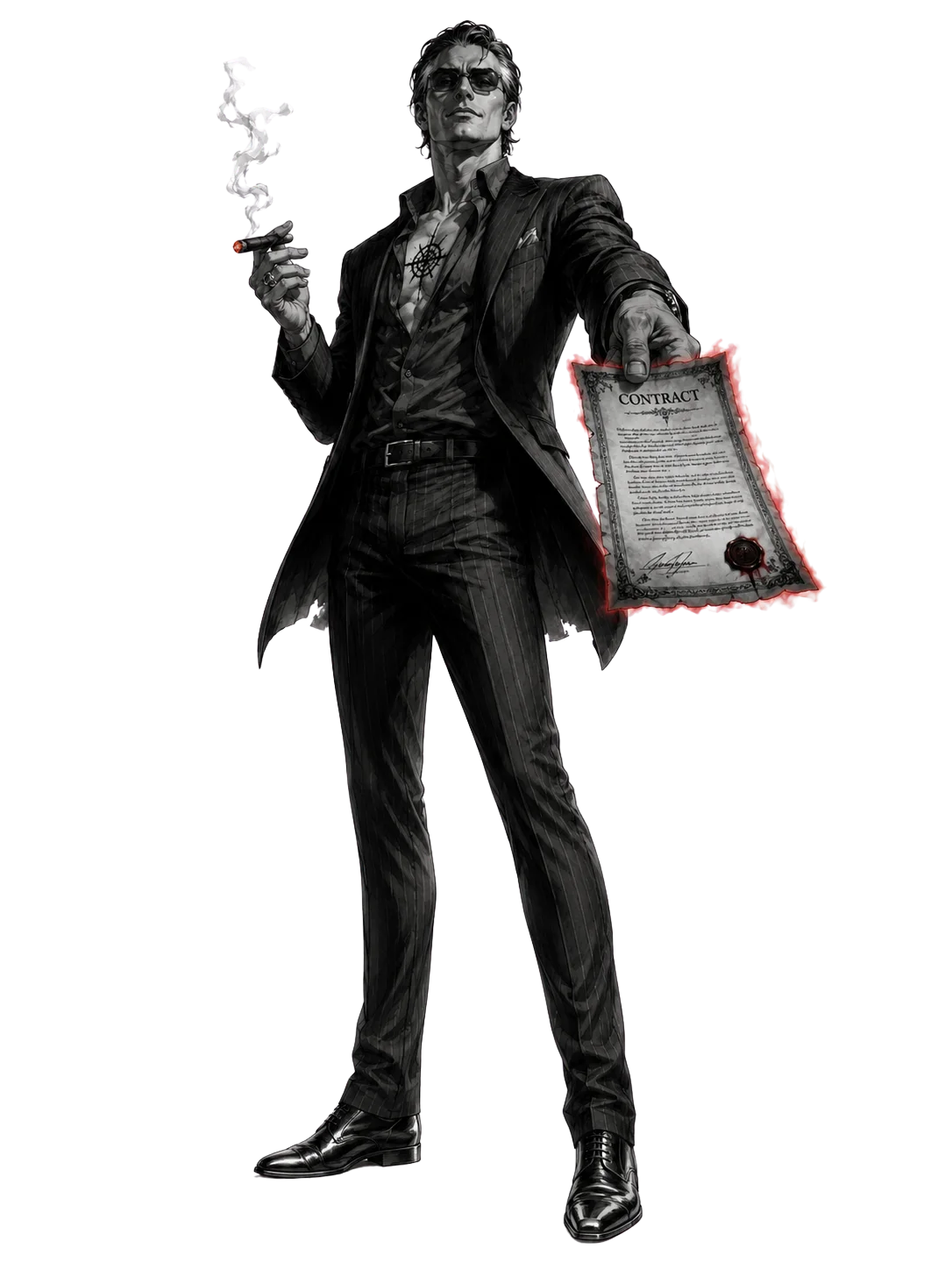
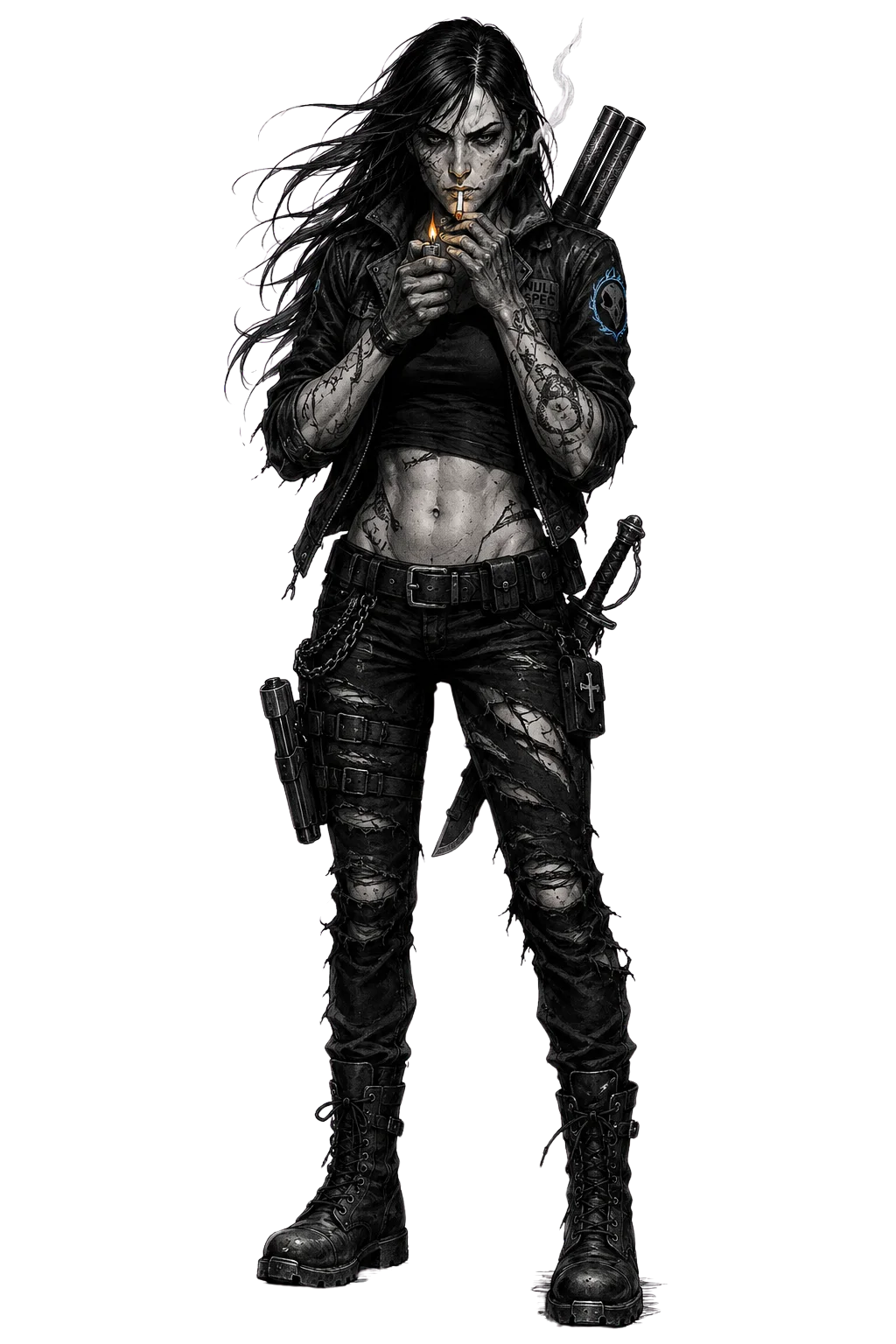
Aragost
A gothic cast shares a monochrome drawing style, sharp shadows, and restrained color accents. Orrin and Dee have distinct roles and silhouettes, yet clearly belong in the same world.
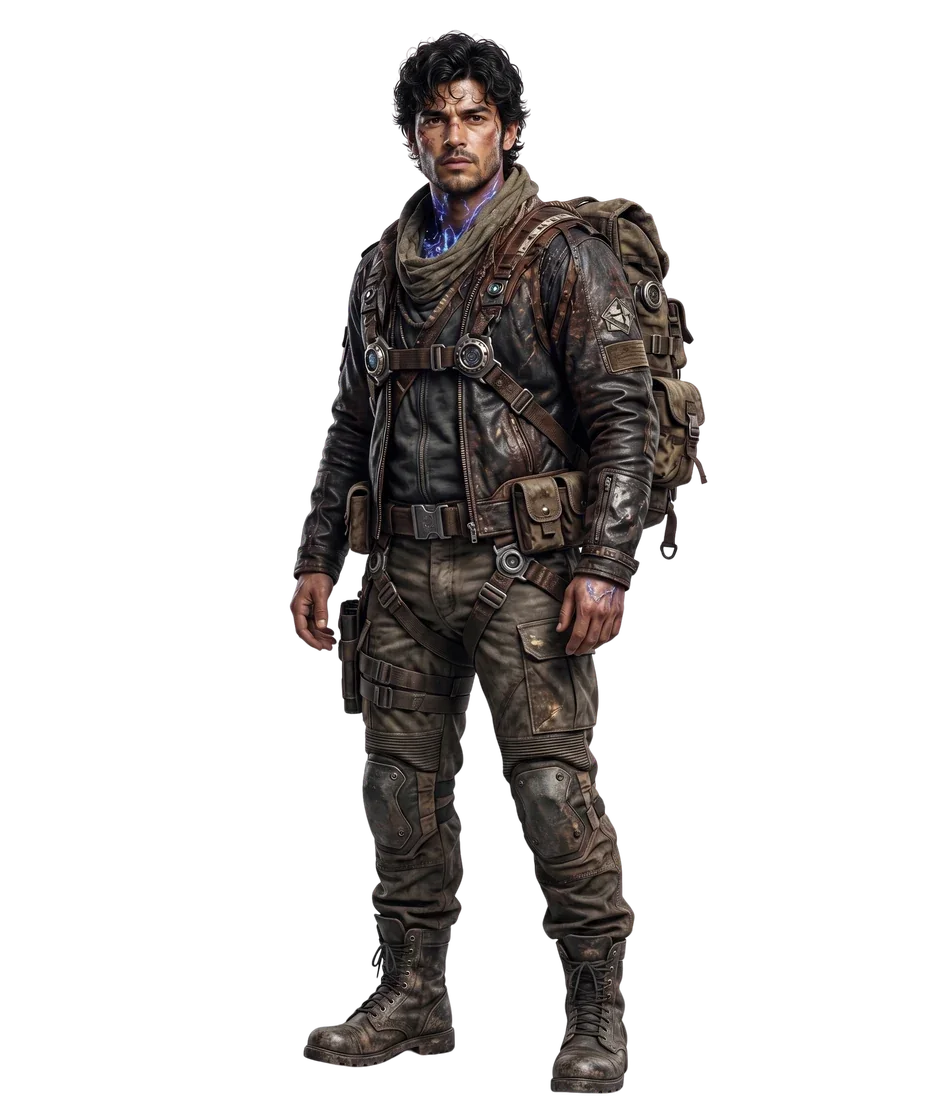
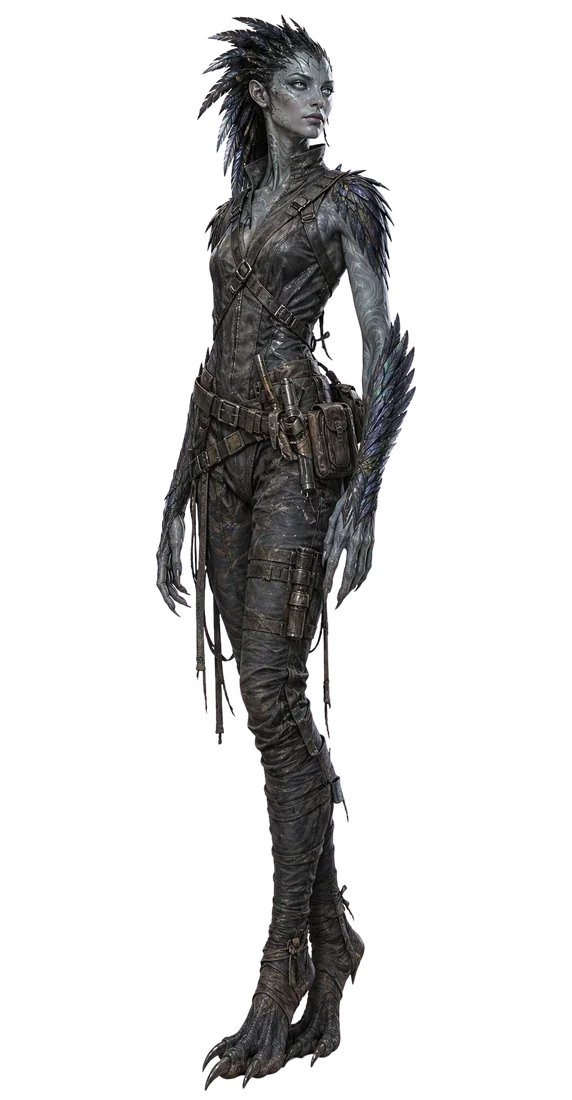
Genesis Children
A salvage ship and its crew share a worn, tactile science-fiction treatment. Elo and Cira remain individual characters while the materials, atmosphere, and world details connect their images.
A character who remains recognizable
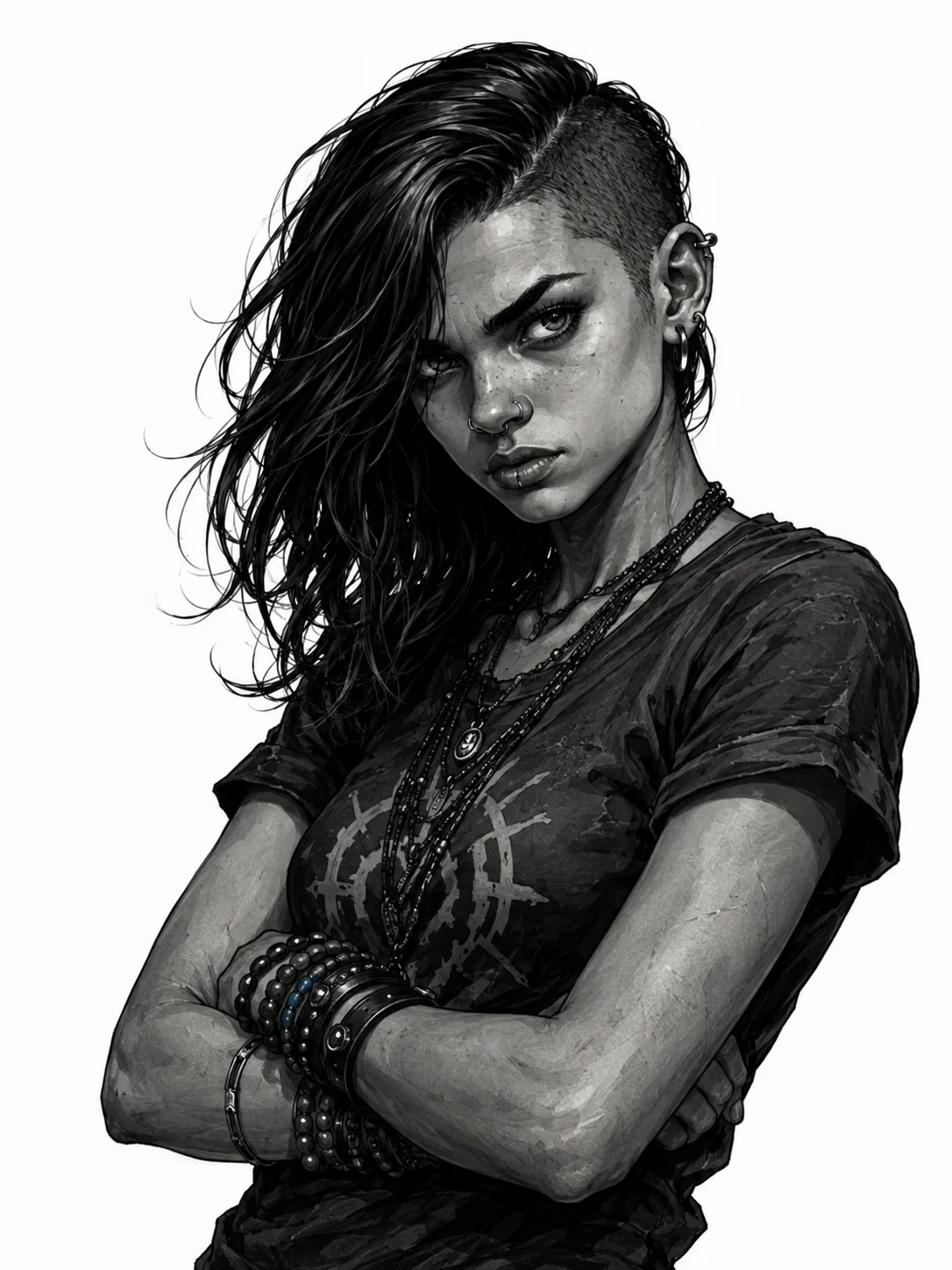
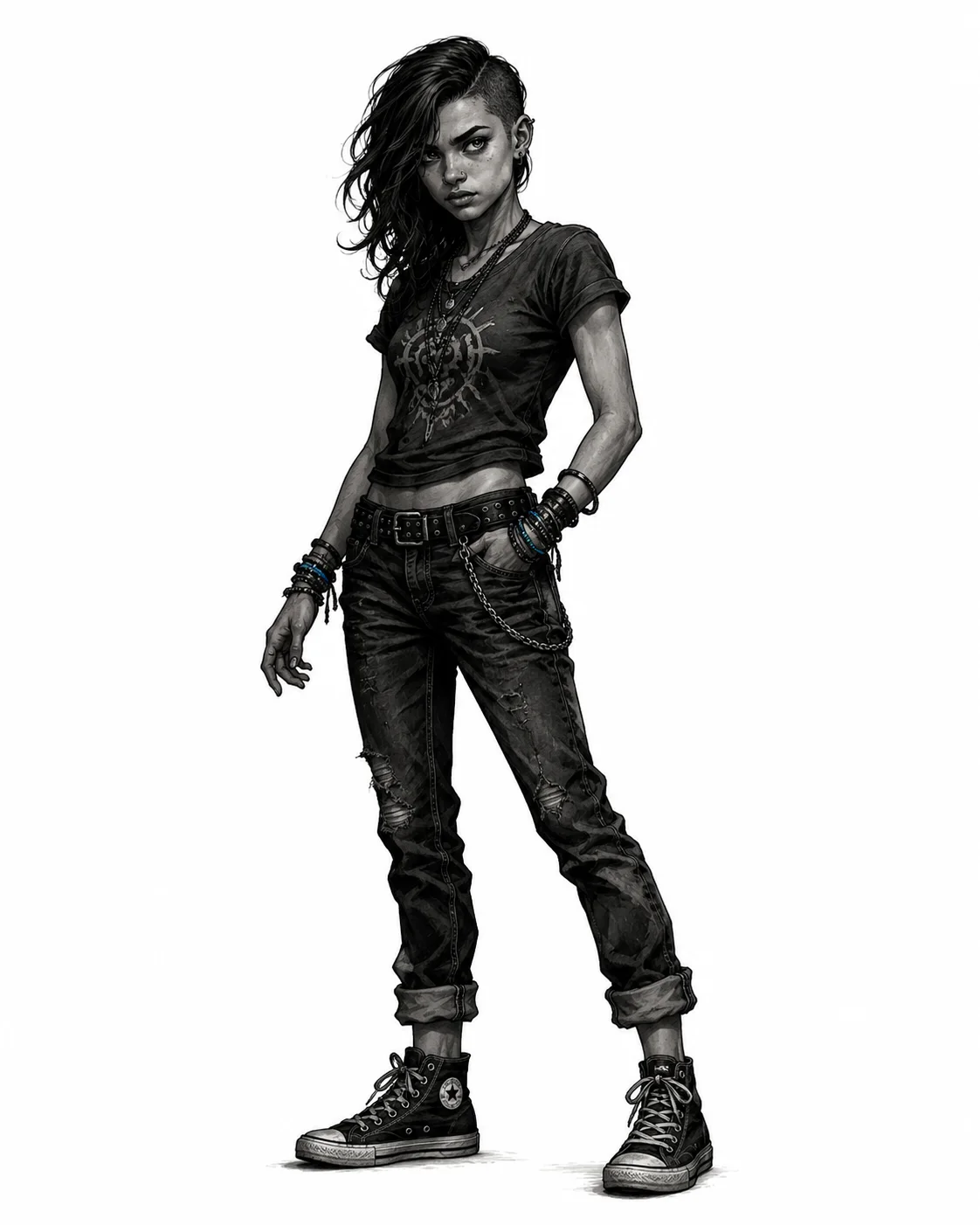
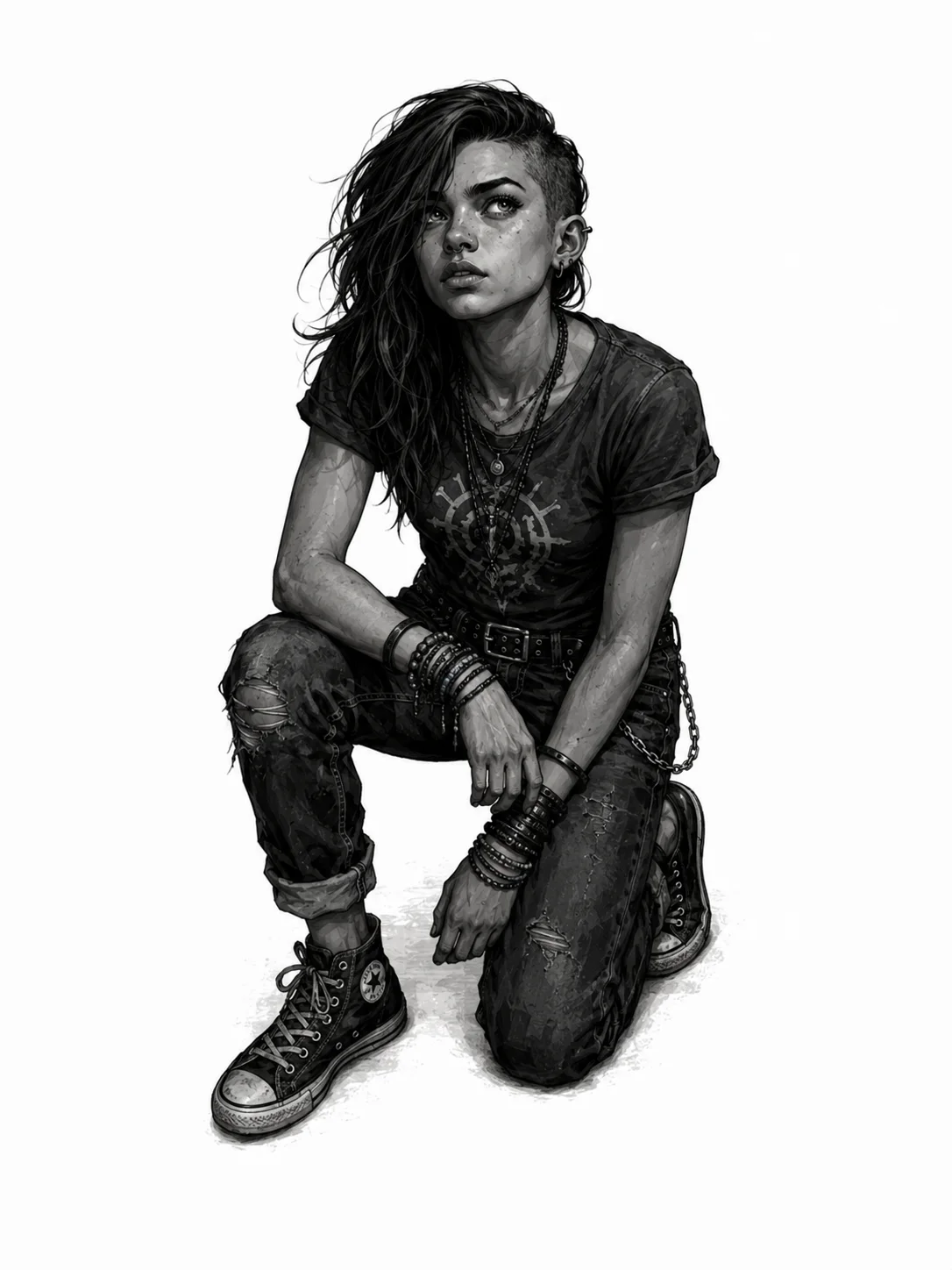
Xochil. A portrait, standing pose, and kneeling pose retain her asymmetrical hair, facial features, clothing language, jewelry, and attitude. The image can change its crop and purpose while keeping the subject familiar.
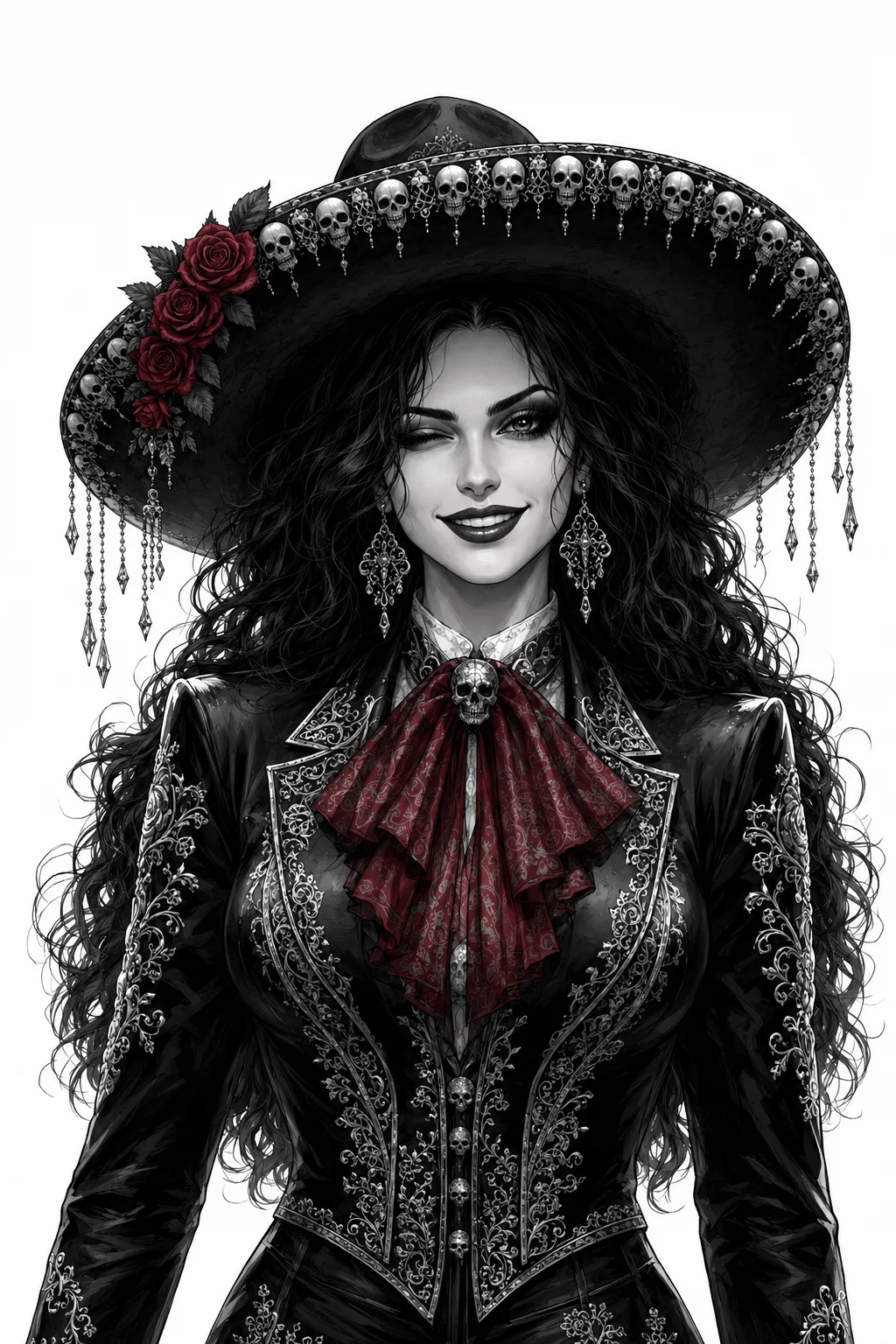
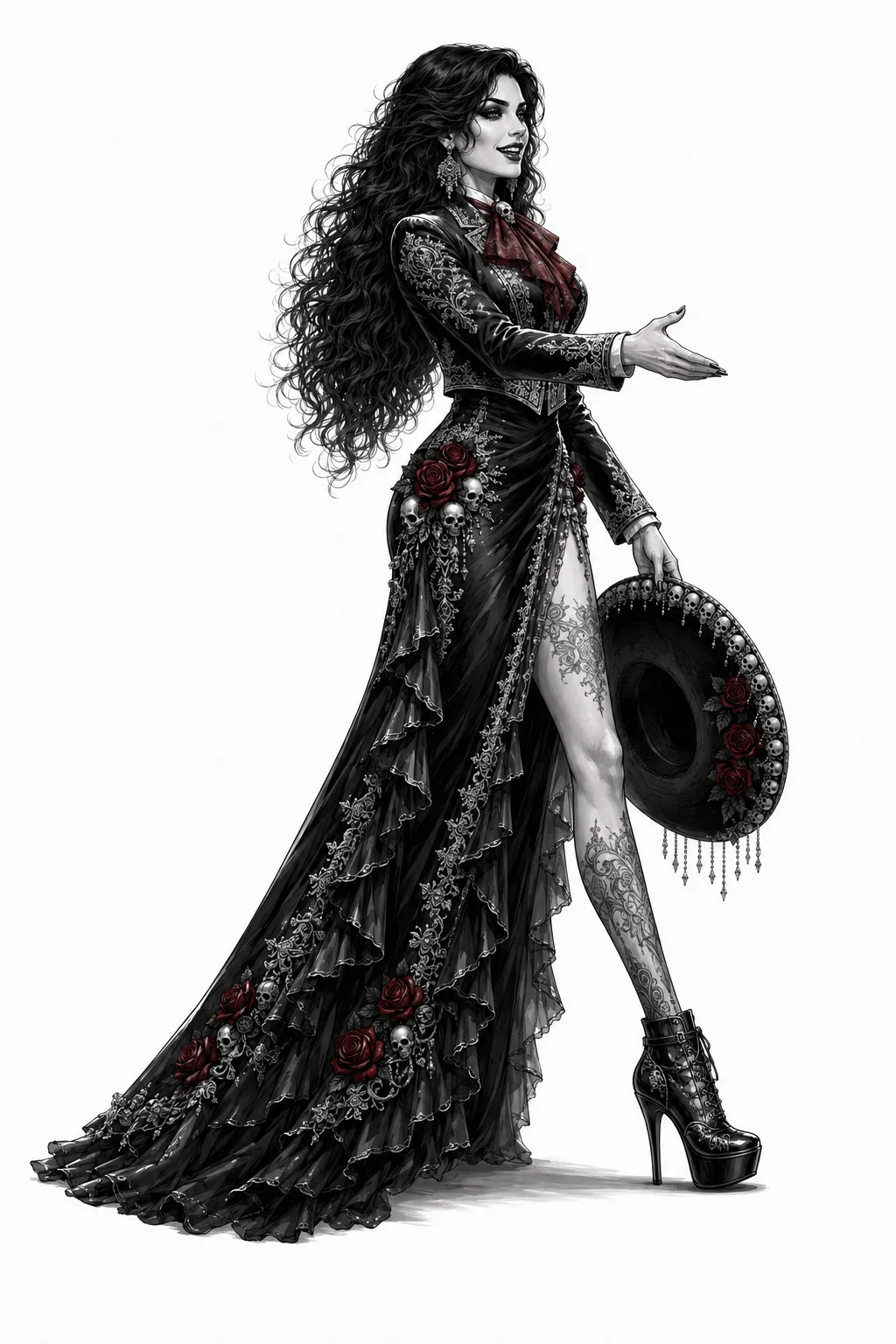
Lianna. A smiling portrait and walking pose carry her elaborate black clothing, dark curls, rose and skull details, and red accents into different compositions. These images show how a recurring subject can do more than repeat one pose.
A story that moves from one scene to the next
The leadership sequence moves from quiet observation to listening and then group discussion. A recognizable lead figure anchors the progression, while a mentor role and shared workplace setting connect the moments. Visual planning makes a set of images more useful together than three isolated illustrations.

01 · Observation

02 · Listening

03 · Discussion
A visual language for the small details
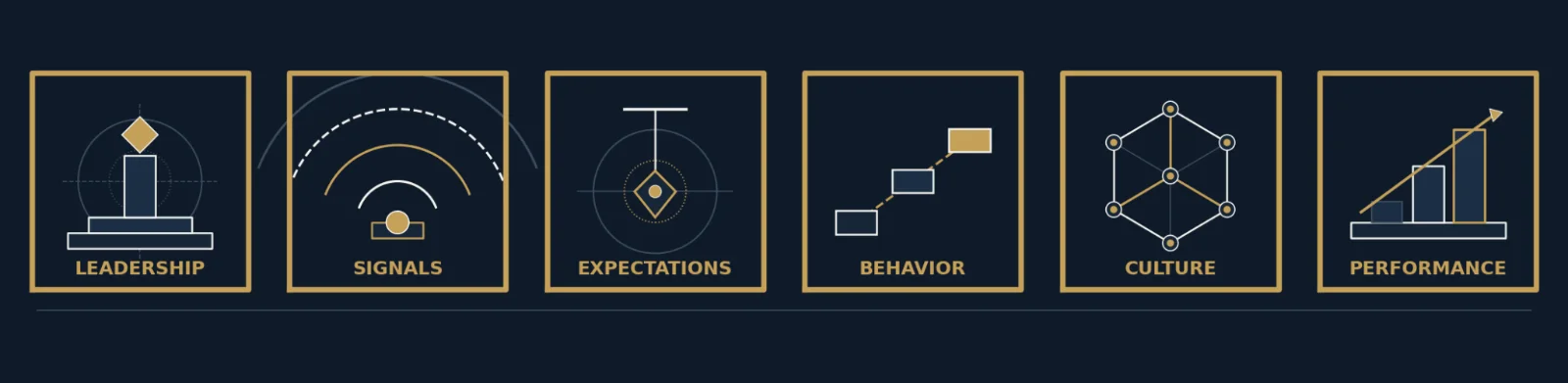
The Culture Architect icon set carries one line, shape, and color vocabulary across leadership, signals, expectations, behavior, culture, and performance. A framework can guide functional graphics as well as large images.
A better presentation of the same idea
The earlier Culture Architect shelf concept used a darker home setting and a looser arrangement. The revised composition brings the books into a clearer, straighter display with more deliberate light and emphasis on the cover. Refinement helps the image do its job when the first version has the right subject but the presentation needs work.
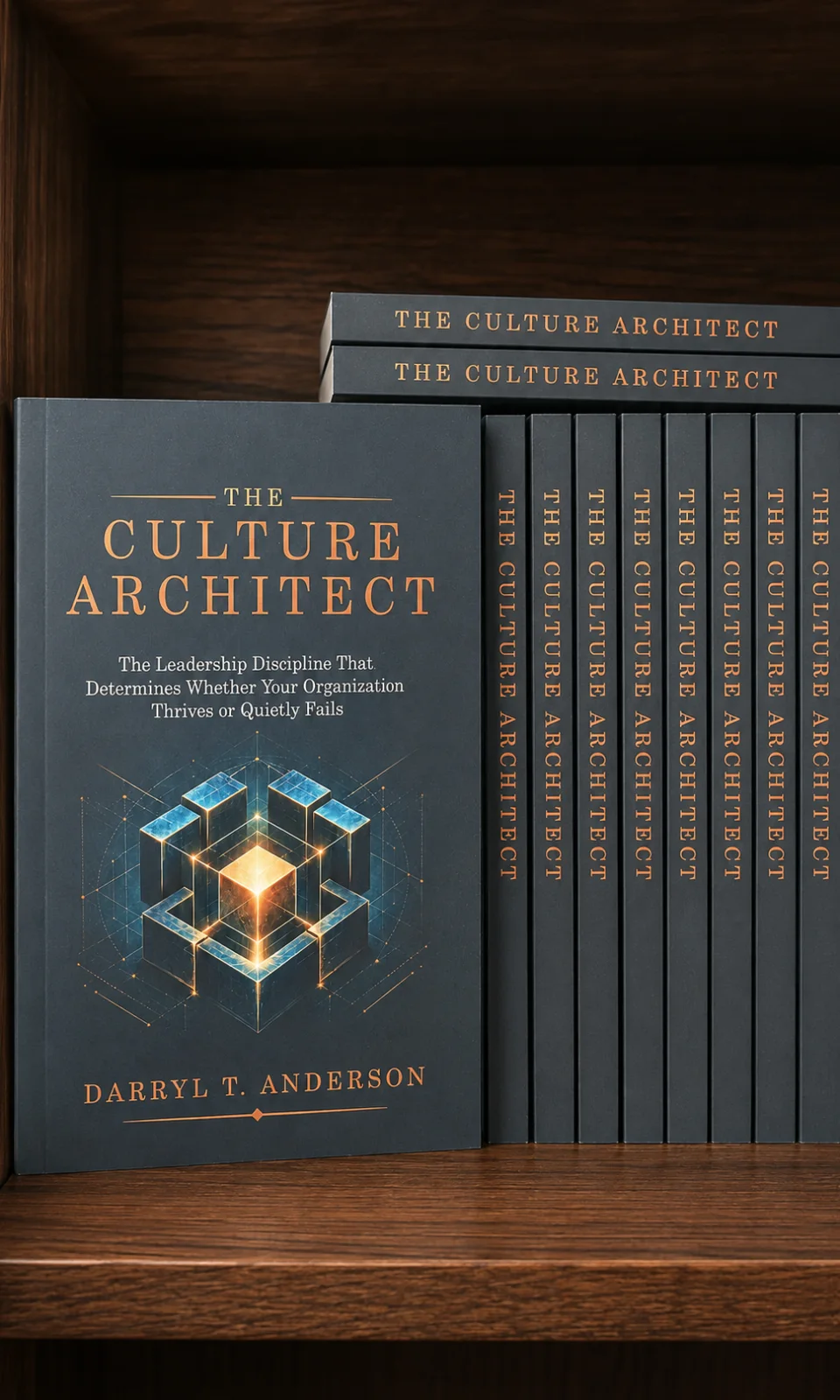
Earlier concept
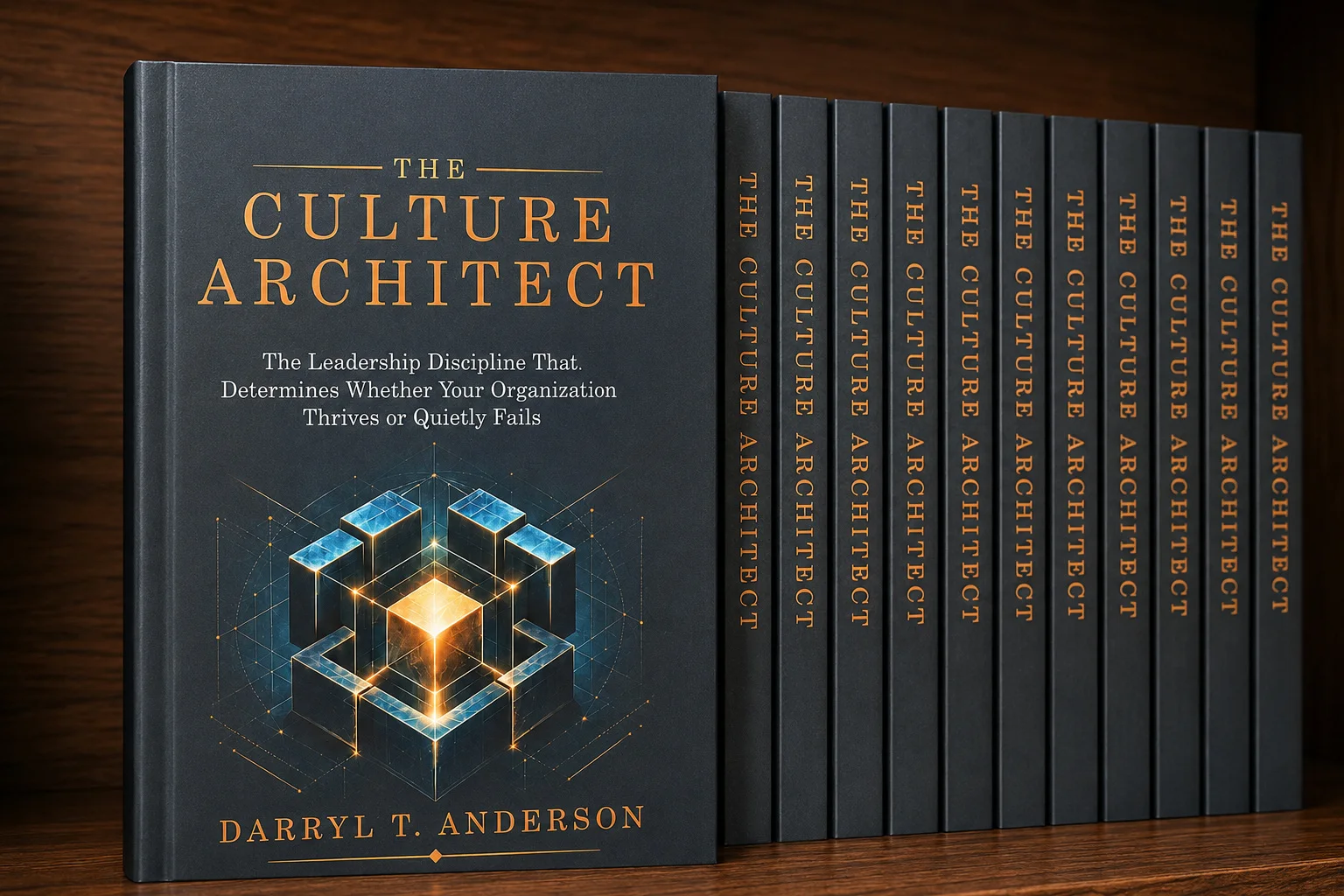
Refined composition
Creative direction stays in human hands.
We use generative AI to explore and produce visual options. Cintman establishes the concept, sets the visual rules, selects and revises the images, and checks how they will be used. You review the direction and approve final client assets before publication.
This matters when your business needs another image months after the first set. A usable framework and organized asset library make it easier to extend the work with a recognizable connection to what is already in use.
Our AI use, openly stated.
Cintman uses generative AI in visual production, including work shown on this page. We identify AI involvement in every AI-involved image we deliver. Our asset system distinguishes a fully generated image (AIG), an original image modified with AI (AIA), and an image combining generated and sourced elements (AIC).
AIG A fully generated image
AIA An original image modified with AI
AIC An image combining generated and sourced elements
For each asset, we keep a production record with its classification, available tool and source information, credits, version, intended use, and approval status. We preserve the source and credit of original material used in assisted or composite work. We review images for visual errors, inappropriate likeness or imitation, misleading documentary appearance, and fit for the audience. We disclose AI use visibly when the context calls for it, as we do here.
Let’s make the next image easier.
Bring us an existing brand, product, recurring character, or idea still taking shape. Cintman, a San Antonio-based generative AI studio, can help turn it into a visual direction you can use now and keep building on.